Guías Uruguayan culture and interesting facts

Uruguayan culture and interesting facts

Mate, asado, the "vos" form of address, Carnival, and the laid-back rhythm of the south—everything you need to know about Uruguayan culture to understand (and love) this country.

CulturaCuriosidades

Uruguay is a country that reveals itself over time. At first glance, it seems quiet, almost boring to those coming from more chaotic cities. But once you get into its rhythm, it’s hard to want to leave. This guide is designed to help you understand what makes this small southern country so special.

Mate — much more than just a drink

Uruguay has the highest per capita consumption of mate in the world—more than Argentina, more than Paraguay. But here, mate isn’t just a drink: it’s a social ritual. You’ll see it on the promenade, in offices, on buses, and at the beach. People walk around with their thermoses tucked under their arms as if they were an extension of their bodies.

  • Mate is meant to be shared. If you're in a group and someone offers you mate, accepting it is a sign of trust. It's okay to decline, but say "thank you" when you don't want any more—that's the signal that you're done.
  • The cebador (the person who prepares and serves the mate) makes it without sugar by default. If you want it sweet, let them know before you start.
  • Don't move the light bulb. Seriously. It's one of the few things that can genuinely annoy a Uruguayan.
Fun fact

In Uruguay, there’s an ongoing debate between those who drink their mate bitter and those who drink it sweet. It’s almost a matter of identity. If you want to fit in quickly, learn to drink it bitter.

The barbecue—a social institution

If drinking mate is a daily ritual, then the asado is a weekly one. A Sunday without an asado in Uruguay is a rarity. It’s not just about eating grilled meat—it’s a reason to get together, to let the afternoon stretch on for hours, and to talk about everything and nothing.

  • Uruguayan barbecues are typically cooked over firewood or charcoal. Most Uruguayans prefer firewood—it gives the food a different flavor.
  • Typical cuts: strip roast, flank steak, chorizo, blood sausage, sweetbreads. Very different from the Argentine asado in terms of cooking times and cuts.
  • The grill master has full authority over the grill. Never tell him how to do it.
  • The barbecue starts "at noon," and the first chorizo arrives at 2. That's perfectly normal.
To get up to speed quickly

If you're invited to a barbecue, offer to bring something. The most welcome items are a bottle of Uruguayan Tannat wine (the local grape), bread, or a salad. Showing up empty-handed is fine among close friends, but the gesture goes a long way.

Language — "voseo" and Uruguayan idioms

Uruguayan Spanish is a form of Rioplatense Spanish, very similar to the dialect spoken in Buenos Aires. The most noticeable difference for someone coming from Mexico, Colombia, or Spain is that in Uruguay, "vos" is used instead of "tú," with different verb conjugations.

  • "Vos tenés" instead of "tú tienes." "Vos sabés" instead of "tú sabes."
  • "Hey" — a way to get someone's attention. "Hey, how are you?" is perfectly normal.
  • "Ta" — short for "está bien." It means "yes," "sure," or "okay." It's the most versatile word in Uruguayan Spanish.
  • "Bah" — an expression of doubt, mild dismissal, or nuance. "Bah, I don't know…"
  • "Awesome" — excellent, great. "How did it go? Awesome."
  • "Cool" — a nice person, a great atmosphere, a great spot. "That place is really cool."
  • "Feca" — coffee with milk (Montevideo slang, especially in traditional bars).
The accent

Uruguayans have a very distinctive intonation, more sing-songy than that of Argentines, with some influences from Portuñol in the northern cities. In Rivera (on the border with Brazil), you’ll hear Portuñol—a spontaneous mix of Spanish and Portuguese that works perfectly well.

The carnival—the longest in the world

The Montevideo Carnival is officially the longest in the world: it lasts more than 40 days, from January through early March. It’s not the Rio Carnival—it’s something completely different and much more local.

  • Murga: groups of 14 to 17 people who perform satirical political theater through song. It is the cultural heart of the Uruguayan carnival. You need to understand local politics to fully appreciate it, but the show is impressive.
  • Candombe: an Afro-Uruguayan rhythm played on drums (chico, repique, piano). Designated an Intangible Cultural Heritage by UNESCO. The candombe gatherings in Barrio Sur are among the most authentic experiences you can have in Montevideo.
  • Open-air stages: popular venues in the neighborhoods where all the groups perform. Much more authentic than the parades downtown.
If you're visiting in the summer

Carnival starts in January. If you're in Montevideo in February, going to a neighborhood tablado is one of the most authentic experiences you can have. They're inexpensive (tickets cost around $200–400 UYU), start late (10 p.m. or later), and go on until the early hours of the morning.

Uruguayan tranquility — the rhythm of the country

One of the first things you notice when you arrive in Uruguay is how calm it is. There’s none of the chaos of Buenos Aires, nor the intensity of São Paulo. The city runs smoothly, the people are friendly, and things get done—though sometimes more slowly than you’d like.

  • Bureaucratic procedures take time. Set aside extra money for anything that involves a government office.
  • Stores open late and close for the siesta. Many department stores and small shops close between 1:00 and 4:00 p.m.
  • Punctuality is flexible. A social gathering "at 8 p.m." can start at 9 p.m. without anyone noticing.
  • The standard tip in restaurants is 10%, though it is not mandatory.
The phrase that says it all

"So? How are you?" — This is a standard greeting. It's not an invitation to talk about your problems. The correct response is "Fine, and you?" regardless of how you're actually feeling. Over time, that changes.

Fun facts that surprise newcomers

  • Uruguay was the first country in the world to legalize cannabis nationwide (2013) and the first in Latin America to legalize same-sex marriage (2013).
  • Soccer is practically a religion. Uruguay has won two World Cups (1930 and 1950) despite having a population of just 3.5 million people. That’s the highest number of World Cup titles per capita in history.
  • Uruguay has the highest per capita consumption of mate in the world. The average Uruguayan consumes more than 8 kg of yerba mate per year.
  • Uruguay has more cows than people. The ratio is approximately 3.5 cows per person.
  • According to Transparency International, it is the least corrupt country in Latin America—year after year.
  • More than 98% of Uruguay's electricity comes from renewable sources: wind, water, and solar power. It is one of the world leaders in clean energy.
  • José Mujica, who served as president from 2010 to 2015, donated 90% of his salary to social organizations and lived on his farm throughout his term. He is considered one of the most humble leaders in the world.
  • Montevideo is home to the Tristán Narvaja Market, a Sunday flea market that has been operating in the Cordón neighborhood for over 100 years. It is an integral part of the city’s identity.
  • Uruguayan dulce de leche is different from the Argentine variety—it’s firmer and less cloying. It’s a source of national pride.
  • Uruguay has 900 km of coastline along the Río de la Plata and the Atlantic Ocean. No point in the country is more than 500 km from the water.
The Kid

The chivito is Uruguay's national sandwich: thin-sliced beef, ham, bacon, egg, cheese, tomato, lettuce, and mayonnaise on bread. It has nothing to do with a goat. The name comes from a story set in Montevideo in the 1940s. It's the most popular dish at cafes and bars across the country. You simply must try it.

Relations with Argentina

Uruguay and Argentina share a brotherly relationship with a complex history—a great deal of shared culture, a great deal of rivalry, and a great deal of mutual affection. Soccer is the most intense chapter in that history. But in everyday life, Argentina’s influence on Uruguay is enormous: television, music, food, and slang.

Uruguayans are quick to distinguish themselves from Argentines when they travel abroad. "No, I'm Uruguayan" is a phrase they say with pride. But at home, they're the first to head over to Buenos Aires on the weekend to see a show or go shopping.

Understanding Uruguay in a single image

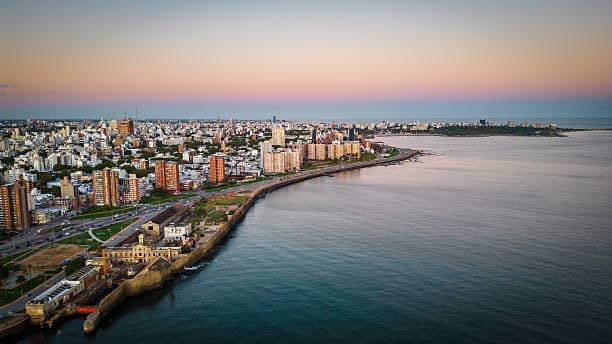
A Sunday at 2 p.m.: a family strolling along the promenade, a thermos of mate tucked under their arm, a dog running free, the sun and the breeze from the Río de la Plata, the smell of barbecue wafting from a balcony. This is Uruguay at its most authentic.

Download the free guide

"Your First 30 Days in Uruguay" — everything you need to know before and after you arrive, in a PDF you can take with you.

No spam. Just the guide. Promise.